



Construction of an Access Road – Key Stages Step by Step
We create stable, safe, and mobile access roads from concrete, aluminum, wooden, steel, and plastic plates, adapted to any terrain. An ideal solution when you need quick access for an excavator, concrete mixer, or heavy transport.
Building an access road always requires appropriate preparations. It’s not just about carrying out specific work, but also about obtaining the necessary permits and acquiring the necessary space to route it. In the following article, we will discuss what needs to be done to connect a plot with a public road.
Construction of an access road on a building plot — legal tools
A developer carrying out construction work must establish a logistical connection between the building plot and the public road. Only in this way can the necessary materials be delivered. So how can you gain access to a public road? There are three ways to do this:
- by purchasing land to create a road necessary for transporting construction materials,
- by purchasing an adjacent plot that would allow for the construction of such a road,
- by establishing (e.g., paid) easement on someone else’s plot.
In this last case, the developer can — through an agreement or court ruling — use the tool of easement. It involves the owner of the adjacent plot providing the possibility of building a temporary road based on an agreement. If the person does not want to draft the appropriate document, a court ruling can be made using the regulations regarding the necessary road. It is worth noting that in this case, an easement can be established, but only if we already have a permit for the location of the exit. If not, to have access to a public road, an appropriate application with attachments must be submitted.
We have permission to build an access road – time to harden it!
Before vehicles with construction materials start arriving at the property under construction, we must properly prepare the site for the access road. If we already have a permit to build the exit, we can start the first phase of work, which is hardening the ground.
To do this, the ground should be excavated to a depth of 20 – 30 cm (depending on how soft the terrain is), and then the surface should be hardened using rubble, crushed stone, gravel, and sand. The base layer should have the largest particle diameter. The higher we go, the larger the gravel particles will be. This way, the ground will effectively absorb mechanical impacts. We can also use rubble and soil obtained during earlier work for hardening the access road.
We should also prepare drainage ditches on the sides. This way, water will not settle on the roadbed but will flow down, thus limiting the phenomenon of softening the substrate. We must be aware that during the construction of the house, our access road may serve us for many months.
Note! Hardening the road is just the first step. If we intend to carry out specific construction work, we should prepare a temporary area where we will place construction materials, some equipment, etc.
Building an access road from the plot to the public road – which solutions to choose?
Permanent Solutions
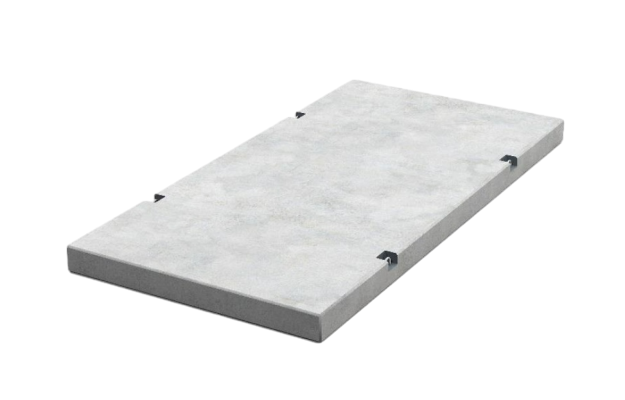
Reinforced Concrete Slabs
Reinforced concrete slabs, also known as concrete slabs, are a solution designed for the construction of durable access roads. They feature very high load-bearing capacity, resistance to cyclic loads, and stability even on weaker soils. Unlike temporary slabs, they do not require dismantling after the completion of the investment and can serve as a permanent access road for heavy transport, construction machinery, or vehicular traffic. This option is chosen in places where access must be long-term, and additional earthworks are minimized.
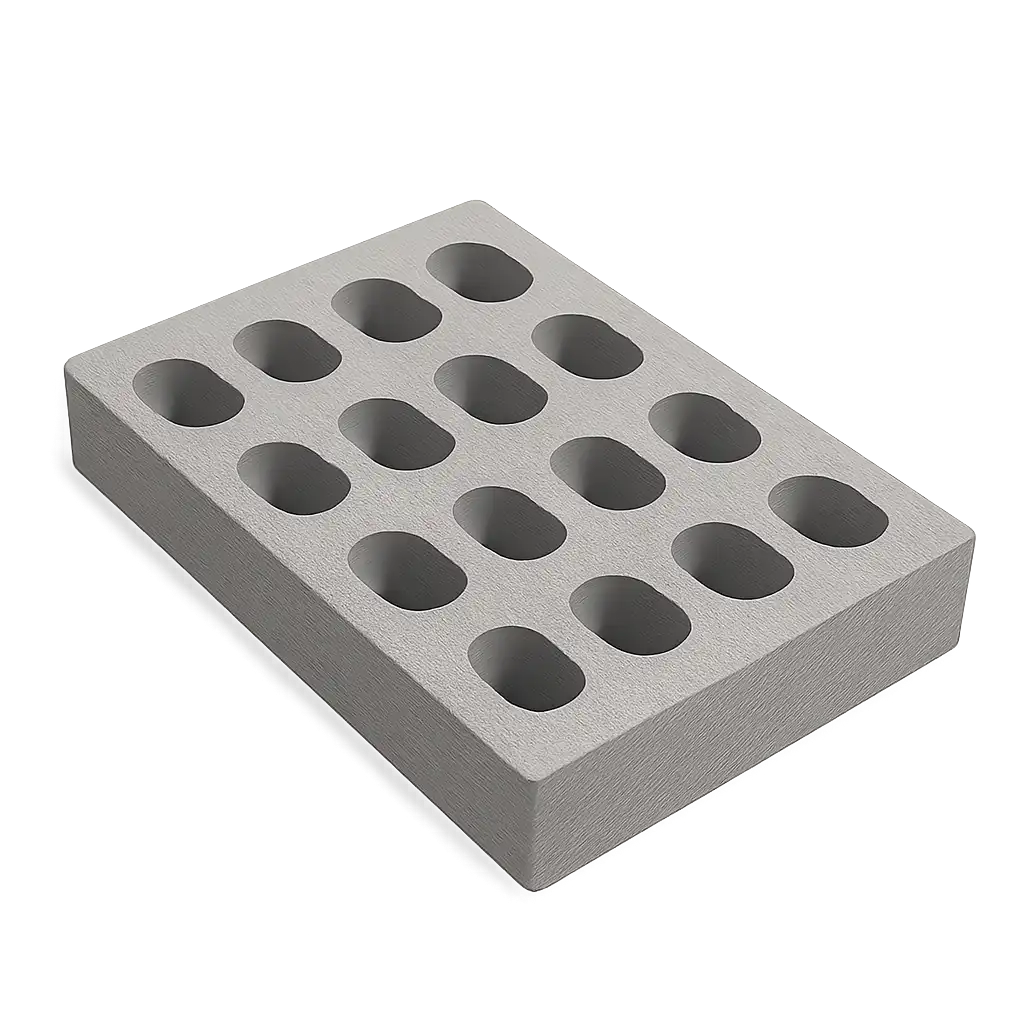
Jomb / Jumbo Slabs
JOMB slabs are popular, prefabricated concrete slabs used for the construction of durable access roads and surfaces with high load-bearing capacity. The characteristic relief holes reduce the slab’s weight and improve its performance under load, ensuring the surface remains stable even with intense heavy vehicle traffic. JOMB slabs are resistant to cyclic loads and weather conditions, and their installation is quick and does not require complicated additional work.
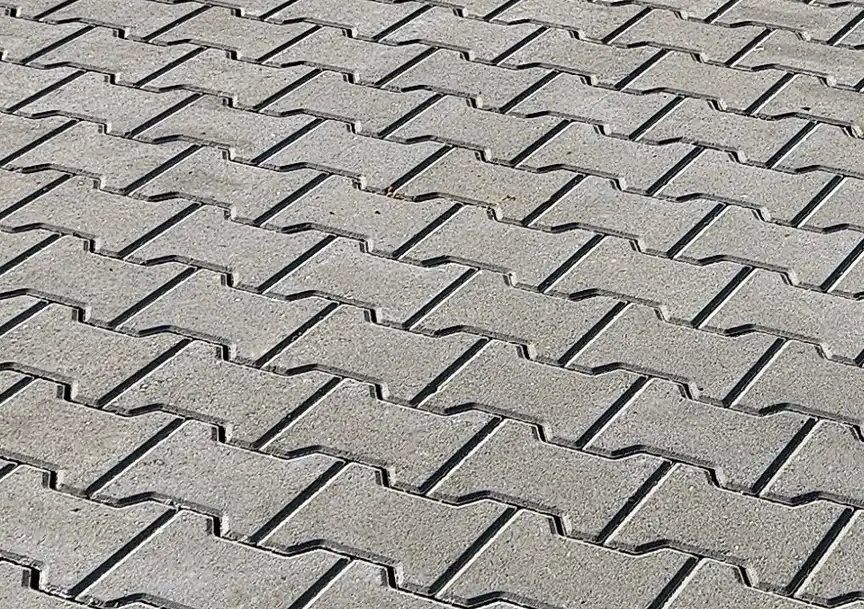
Concrete Paving Stone
Paving stone is a durable and aesthetic solution that works well in areas where both load-bearing capacity and surface appearance are important. Concrete paving provides good stability, even load distribution, and resistance to weather conditions. It is used for permanent driveways, internal roads, parking lots, and pathways to buildings. Thanks to its modular design, it is easy to repair or replace a section without interfering with the entire surface.
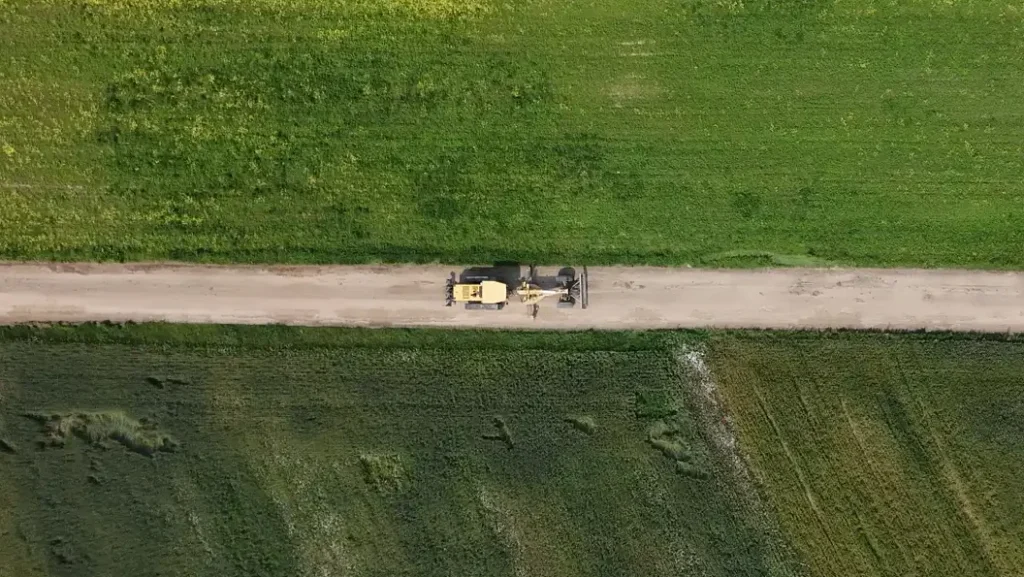
Soil Stabilization
Soil stabilization is a key step in the construction of durable roads, especially in areas with poor load-bearing capacity. It involves strengthening the substrate with special binders, making the soil resistant to settling, moisture, and loads. This solution is often used in combination with other methods to ensure the surface remains stable for many years. Stabilization significantly extends the lifespan of the entire road and minimizes the risk of future repairs.
Need a durable access road?
If you are interested in permanent surfaces – JOMB slabs, concrete paving, soil stabilization, or screeds – check out the full range of available solutions.
Temporary Solutions
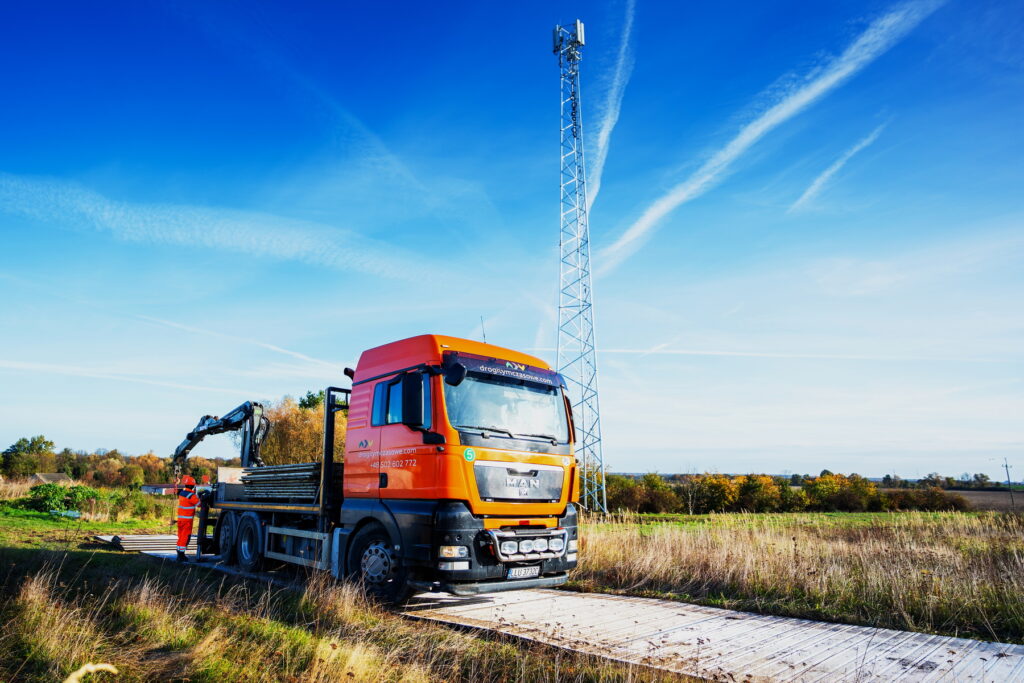
These are technologies designed for quick access during construction, mast assembly, earthworks, or heavy equipment deliveries. They provide immediate load-bearing capacity, can be relocated multiple times, and do not permanently interfere with the ground.
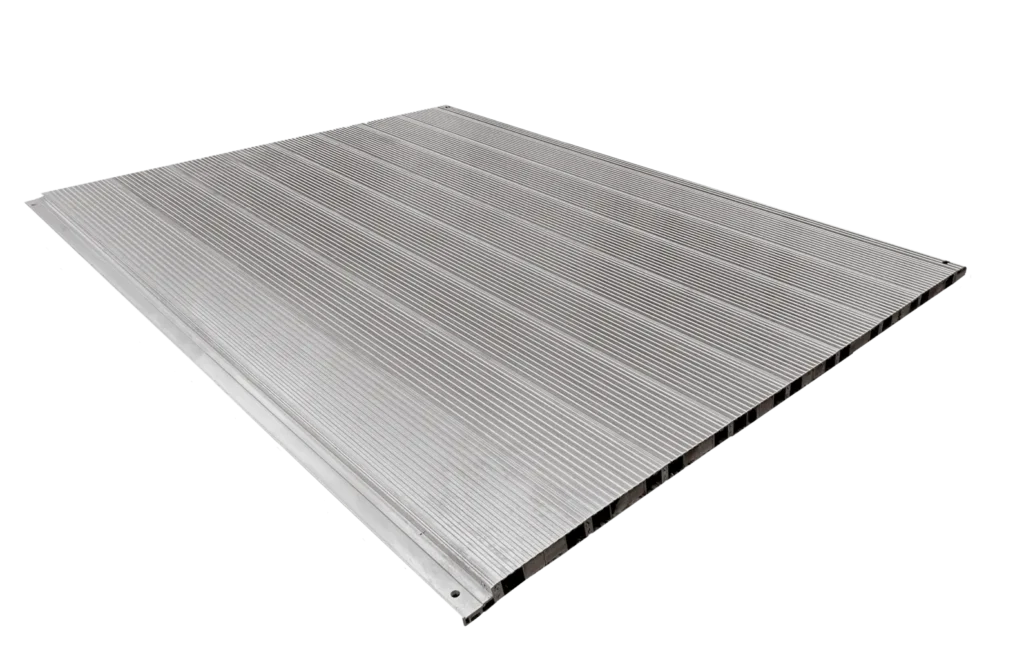
Aluminum Plates
The road can be paved using aluminum plates. This is an ideal solution for flat and sloped areas, which are properly leveled using a subgrade. Aluminum plates are durable and, most importantly, they are fastened using bolted connections. They measure 215 cm in length, and their width complies with regulations at 3 meters, which is required for technical and temporary roads. The construction of a turn on the access road is achieved by connecting the plates at a 45-degree angle.
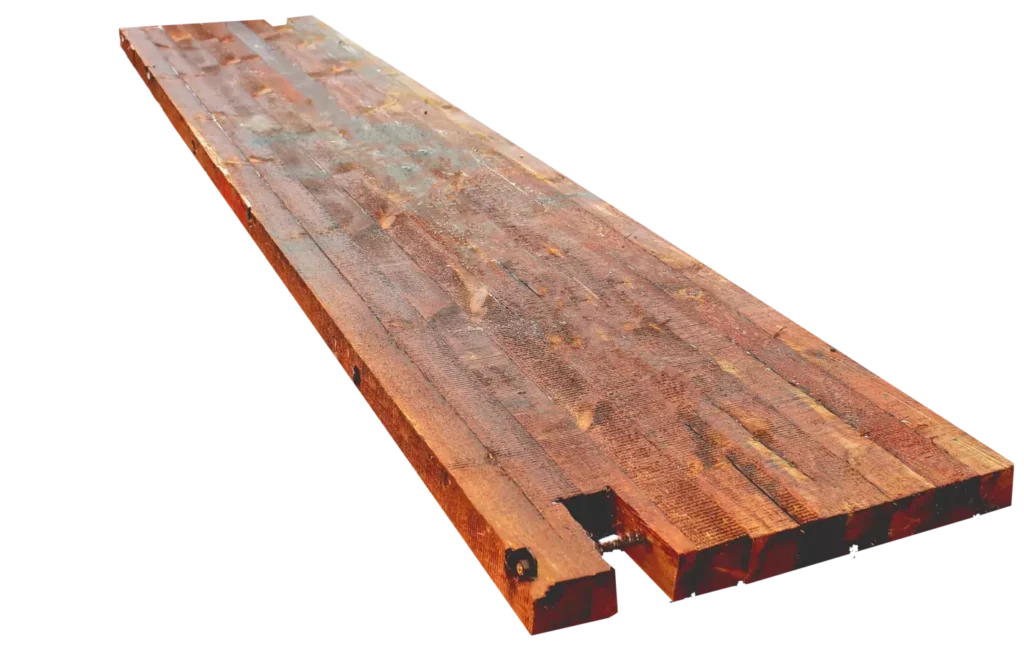
Wooden Plates
An access road can be outlined using wooden plates in two ways. The first method involves using Strong plates, which measure 220 x 430 cm. They can be joined together using tongue-and-groove connections. The second option is to use narrow (meter-wide) Metrum plates, which can be mounted longitudinally (creating two tracks) or transversely (creating a full road). They are connected using steel rods.
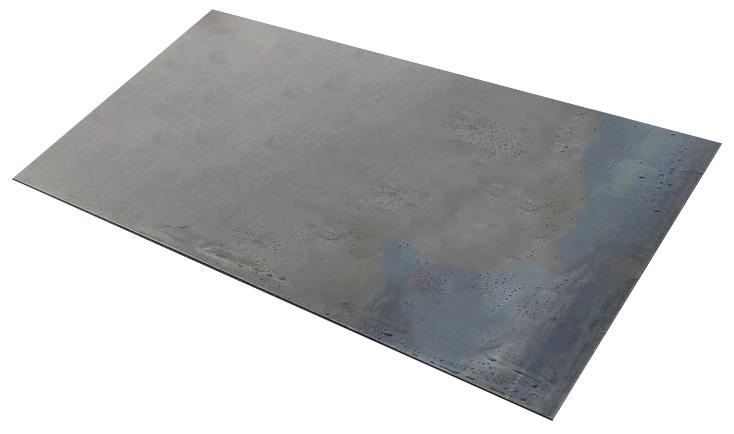
Steel Plates
This solution ensures safe passage even when the ground is characterized by very low cohesion. Steel road plates effectively bear the loads of heavy machinery and vehicles, making them suitable for peat, marshy, or heavily rutted areas. They are most commonly used in two sizes: 150 × 300 cm and 200 × 300 cm, allowing for the rapid creation of stable communication routes with high load-bearing capacity. Steel plates can be reused multiple times in different locations, and their assembly and disassembly are efficient even in challenging terrain conditions.
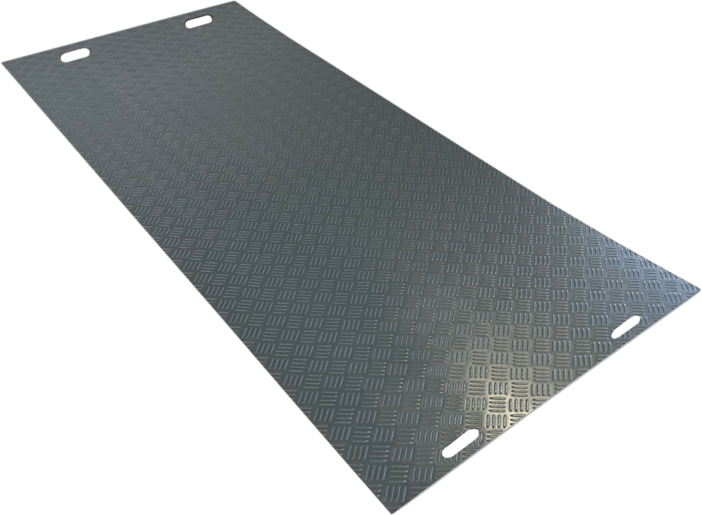
Flex Deck Panels
The driveway can also be made from plastic plates, or rather, Flex Deck panels, which feature a fairly rough surface that significantly improves driving conditions. Panels measuring 300 x 100 cm can be mounted longitudinally (laying tracks 1 m wide each) or transversely. Flex Panels are also suitable as a base for temporary construction warehouses. Thanks to their flexible design, they adhere well to the ground, distributing pressure and minimizing the risk of sinking on soft soils. This is a practical solution where a quick, stable, and reusable surface is needed.
Request a Quote for Temporary Road Surface
Do you want to know the cost of surface stabilization or check the availability of plates in your region?
📞 Call: +48 500 002 005
📧 Write: kontakt@drogitymczasowe.com
🌐 Contact Form
FAQ - Access Road Construction
How to quickly prepare a passable road for the duration of the investment?
The most practical solution is road plates – they provide a stable surface immediately after installation and allow heavy vehicles to safely enter the construction site without waiting for materials to bind or compact.
Do road plates work on muddy or waterlogged ground?
Yes, they are designed for this purpose. Even on peat, soggy soil, or agricultural land, the plates provide a flat, non-yielding surface. In places where aggregate sinks after the first pass of an excavator – the plates maintain full load-bearing capacity.
What is more cost-effective: renting plates or spreading aggregate?
In most situations, renting plates is cheaper. Aggregate needs to be constantly replenished, and heavy machinery can still crush it into the soft ground. Plates create a repeatable surface, eliminate downtime, and reduce repair costs.
What solution to choose if the road is only for the duration of construction?
Temporary systems work best: aluminum, wooden, steel, or plastic road plates. They are installed quickly, can be adjusted freely, and the ground remains intact after dismantling.
What to choose if the road is to be permanent?
For durable surfaces, concrete slabs (including JOMB), paving stones, or soil stabilization are used. These solutions are designed for long-term use and the loads generated by trucks and construction equipment.