Geomattress + Road Plates – A Stable Technological Road on Weak Ground
Knee-deep mud, sinking excavator wheels, and trucks stuck to the axles – this image is a nightmare for any construction manager. When a construction site is located on weak, marshy ground, organizing access for equipment becomes the main logistical problem.
The combination of a geomattress with road plates creates a stable structure that allows works to be safely carried out even on swampy or peat lands. This solution is much more cost-effective than traditional soil replacement or massive gravel dumping.
How to Make an Access Road on Weak Ground?
Weak ground is a substrate that does not meet the load-bearing requirements for planned works. In practice, we are talking about clay in a plastic state, peat, silt, or soils with a high groundwater table.
Traditional solutions include soil replacement (expensive and time-consuming), massive gravel dumping (which “sinks” into the substrate), or piling (requires specialized equipment). The problem is always the same – the weak ground does not disappear, and adding additional layers of material without proper load distribution is like fighting windmills.
That is why modern ground stabilization methods based on geomaterials are increasingly being used.
What is a Geomattress and How Does It Work?
A geomattress is a construction made of geotextile or geogrid filled with aggregate. It acts like a giant mattress that distributes the load from a point (machine wheel) to a surface, significantly reducing the pressure on weak ground.
It consists of a lower layer (separation geotextile), a geogrid forming a “container” for aggregate (fraction 31/63 mm or 0/63 mm), and an upper layer. The thickness usually ranges from 0.5 to 1.0 m.
Mechanism of Action:
- Load distribution over a larger surface
- Grain interlocking – the aggregate cannot move laterally
- Layer separation – prevents mixing of aggregate with weak ground
Thanks to these mechanisms, even very weak ground can carry loads from heavy equipment without the risk of sinking. This solution is effective wherever a technological road is needed on an unstable substrate.
Practical Implementation – Road on Swampy Ground
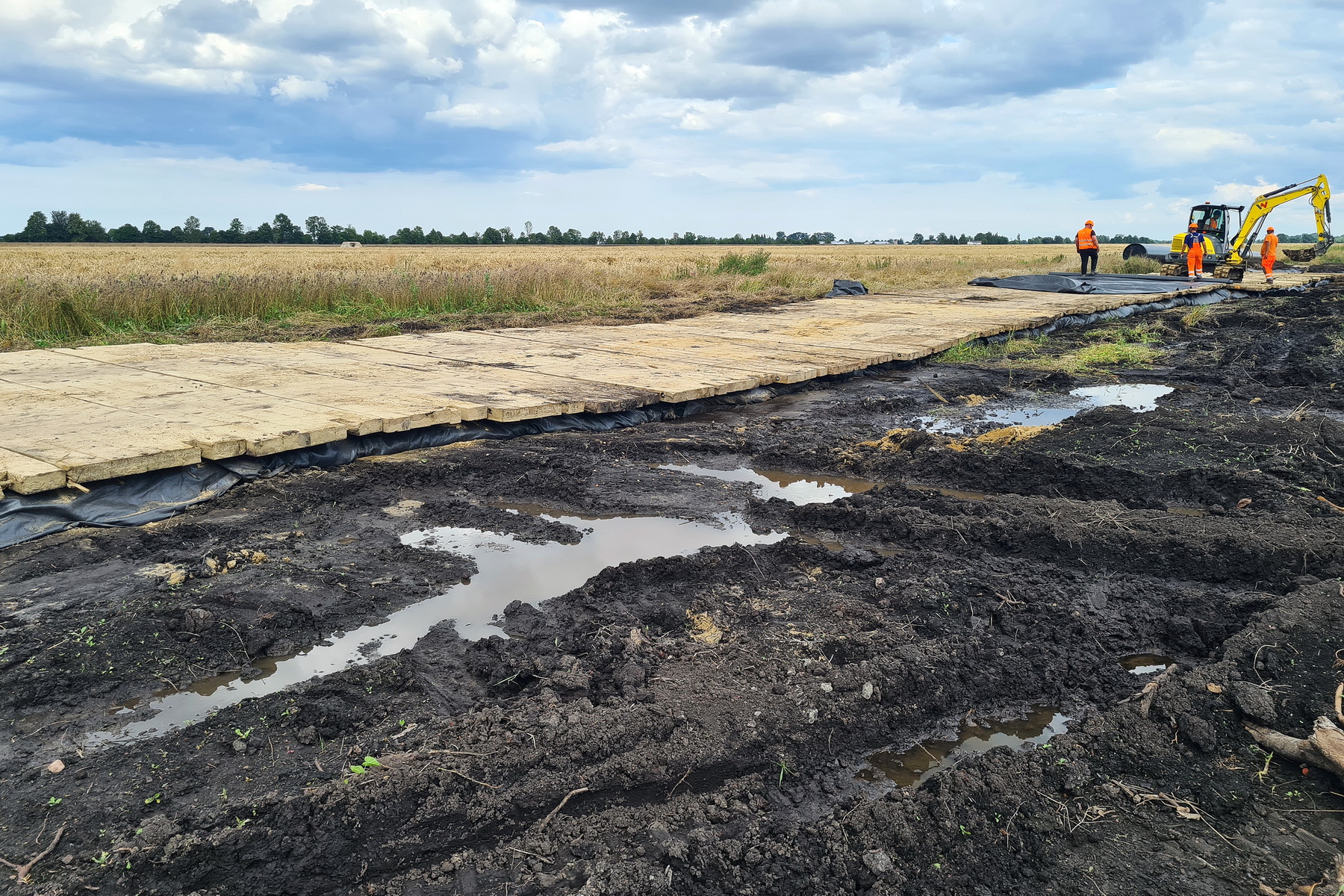
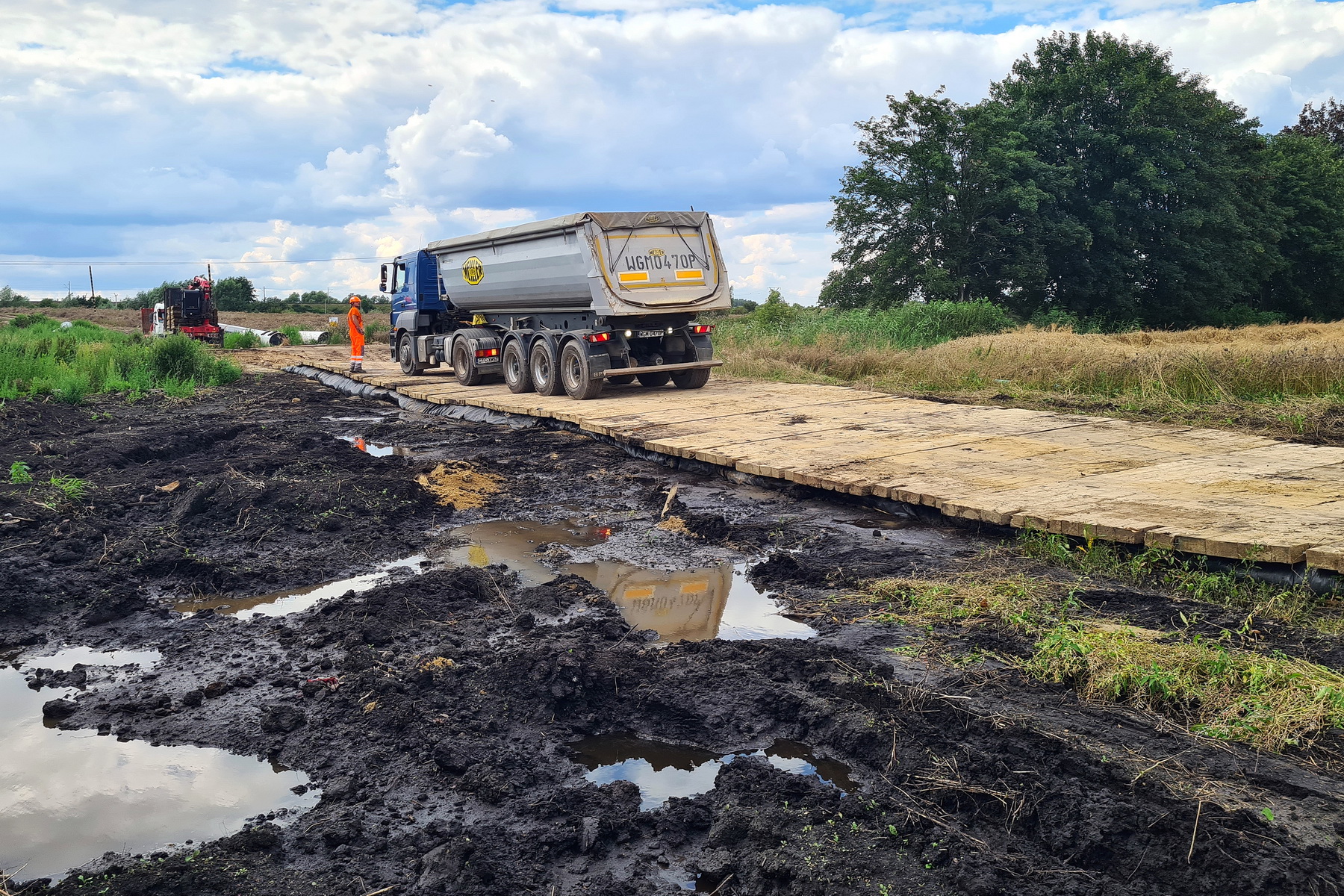
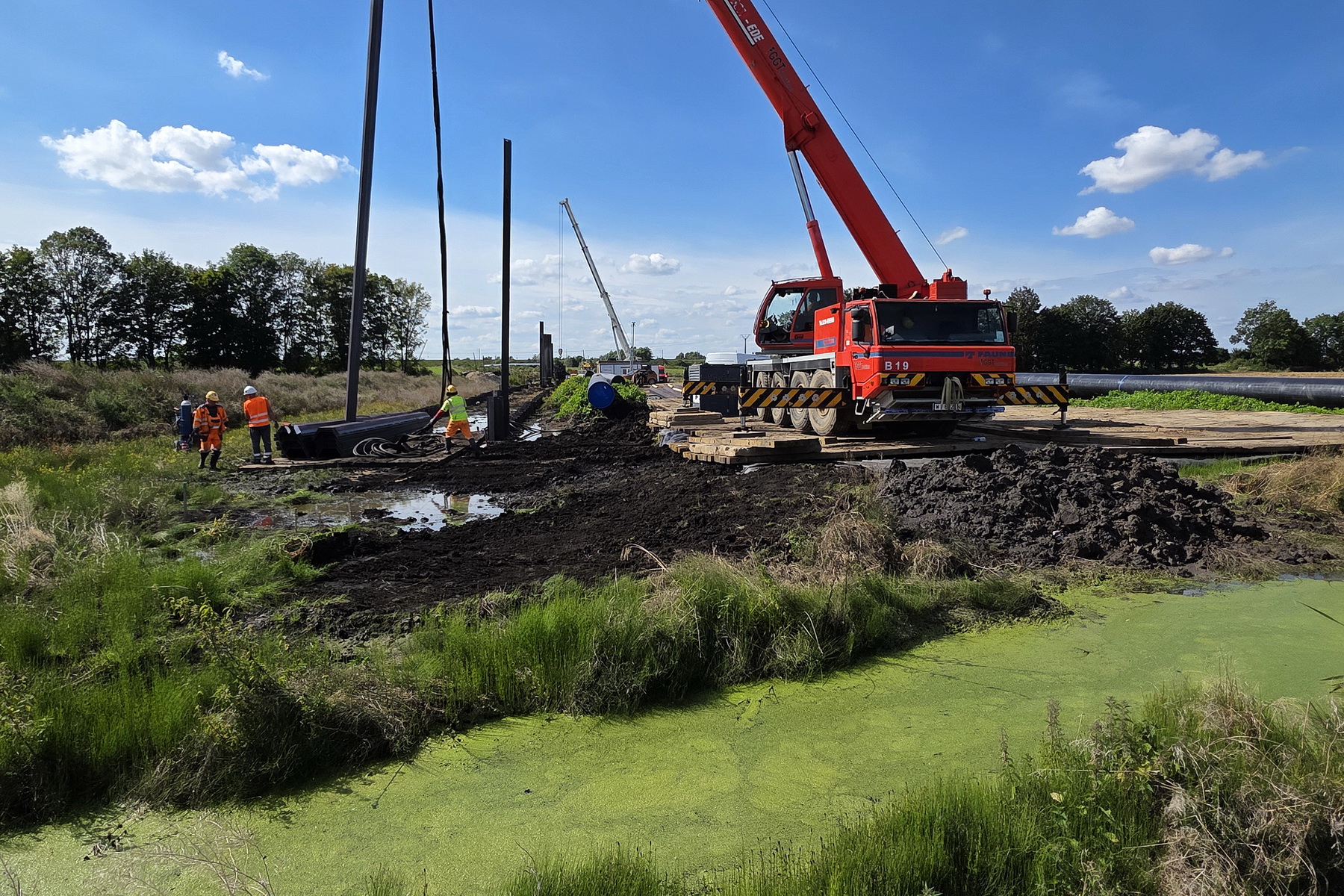
The best way to demonstrate this is with a specific example. In the implementation shown in the photos at the top of the article, we dealt with swampy, wet ground with visible puddles and mud – extreme conditions for any construction.
Stage 1: Laying separation geotextile directly on weak ground. No excavations, no soil replacement – saving time and costs.
Stage 2: Installation of bidirectional geogrid and filling with crushed aggregate fraction 31/63 mm. Compaction in layers every 25-30 cm. Target thickness: 50 cm.
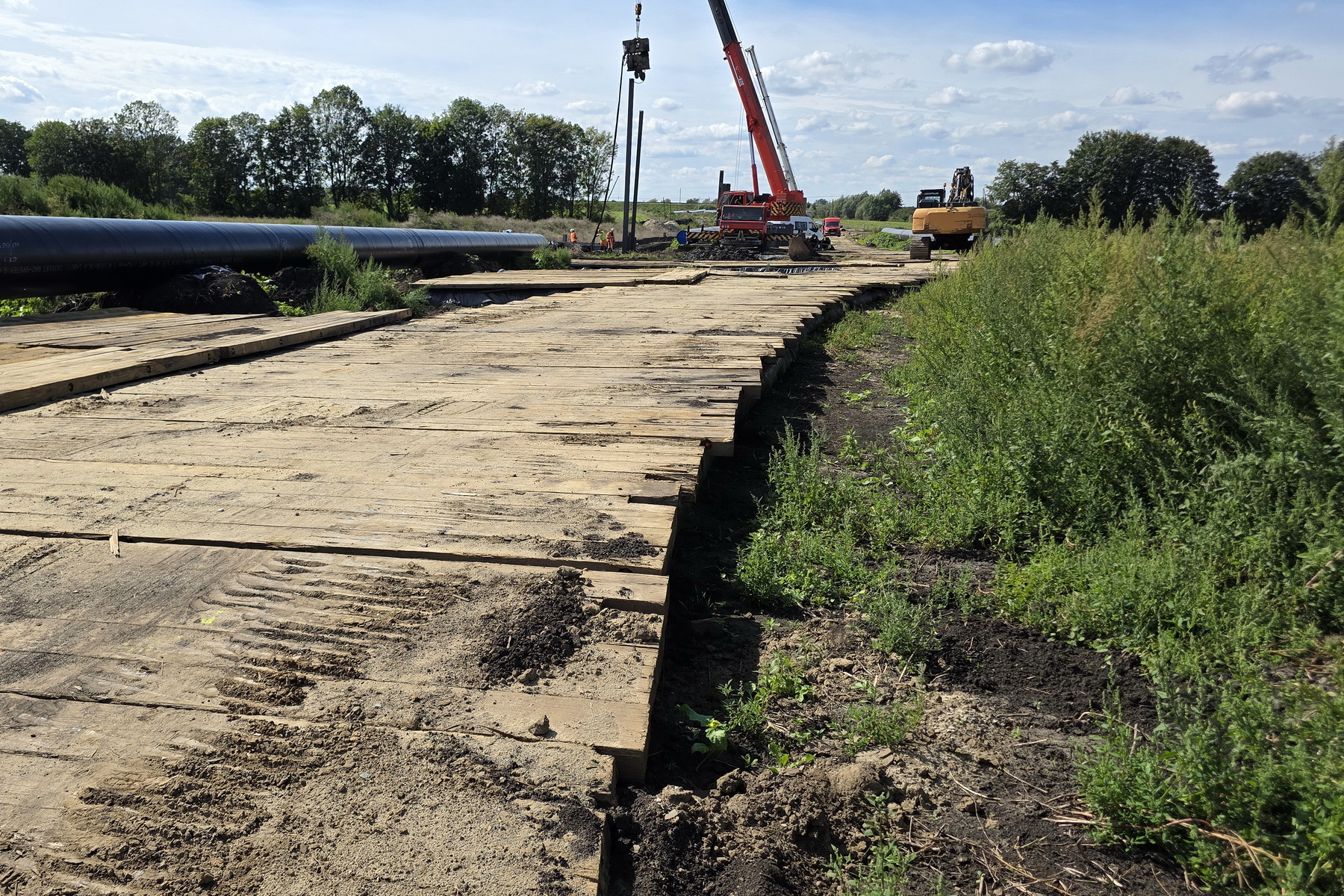
Stage 3: Laying road plates to create an even, stable driving surface that protects the geomattress and additionally distributes loads.
Result? A stable road on which heavy equipment moves freely. No sinking, no getting stuck. We use similar solutions when building temporary roads across Poland.
Road Plates as the Crowning of the Geomattress
The mere construction of the geomattress is only half the success. Crowning the structure with road plates provides:
- Additional load distribution over a larger surface of the geomattress
- Even surface – comfort and safety for operators
- Protection of the structure from direct tire contact
- Possibility of disassembly and reuse on another site
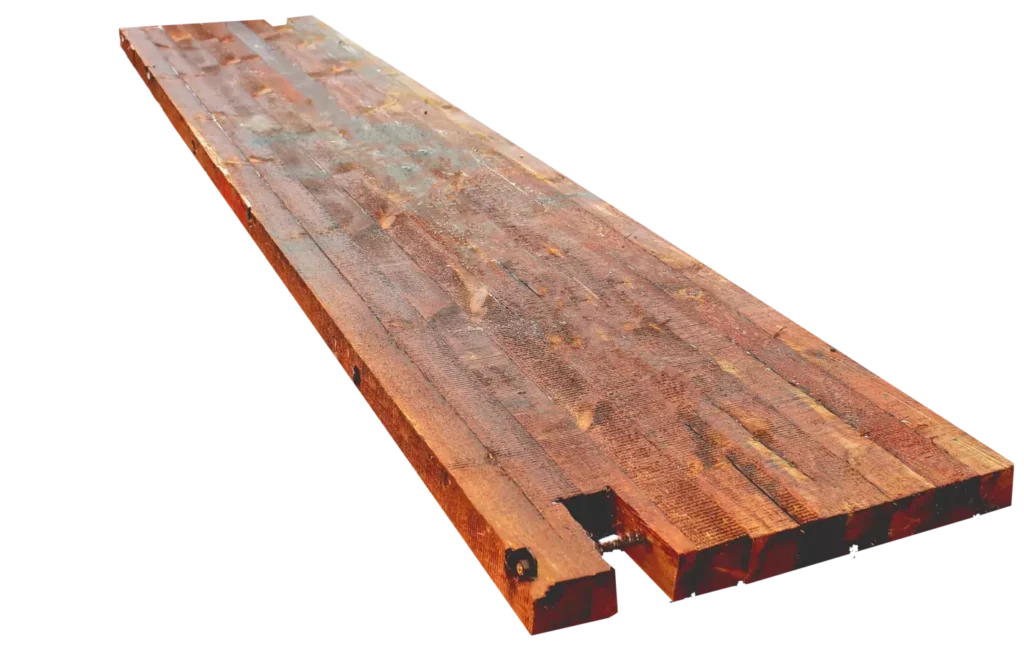
For such implementations, we most often use Metrum wooden plates, which are ideal for geomattresses. Their main advantages are low weight (easier transport and assembly), adequate load-bearing capacity for heavy equipment, and the possibility of multiple uses. As a result, renting road plates is an economical solution – after the project is completed, the plates return to us and are sent to another construction site.