



Construction of a temporary road along a 110 kV power line
Medium- and high-voltage power lines are infrastructure without which almost no sector of the economy can function. Their construction, modernization, and maintenance, however, require something that is rarely discussed—good access. Without a stable road to each pole location, it’s impossible to run heavy equipment efficiently, and the investment schedule quickly falls apart.
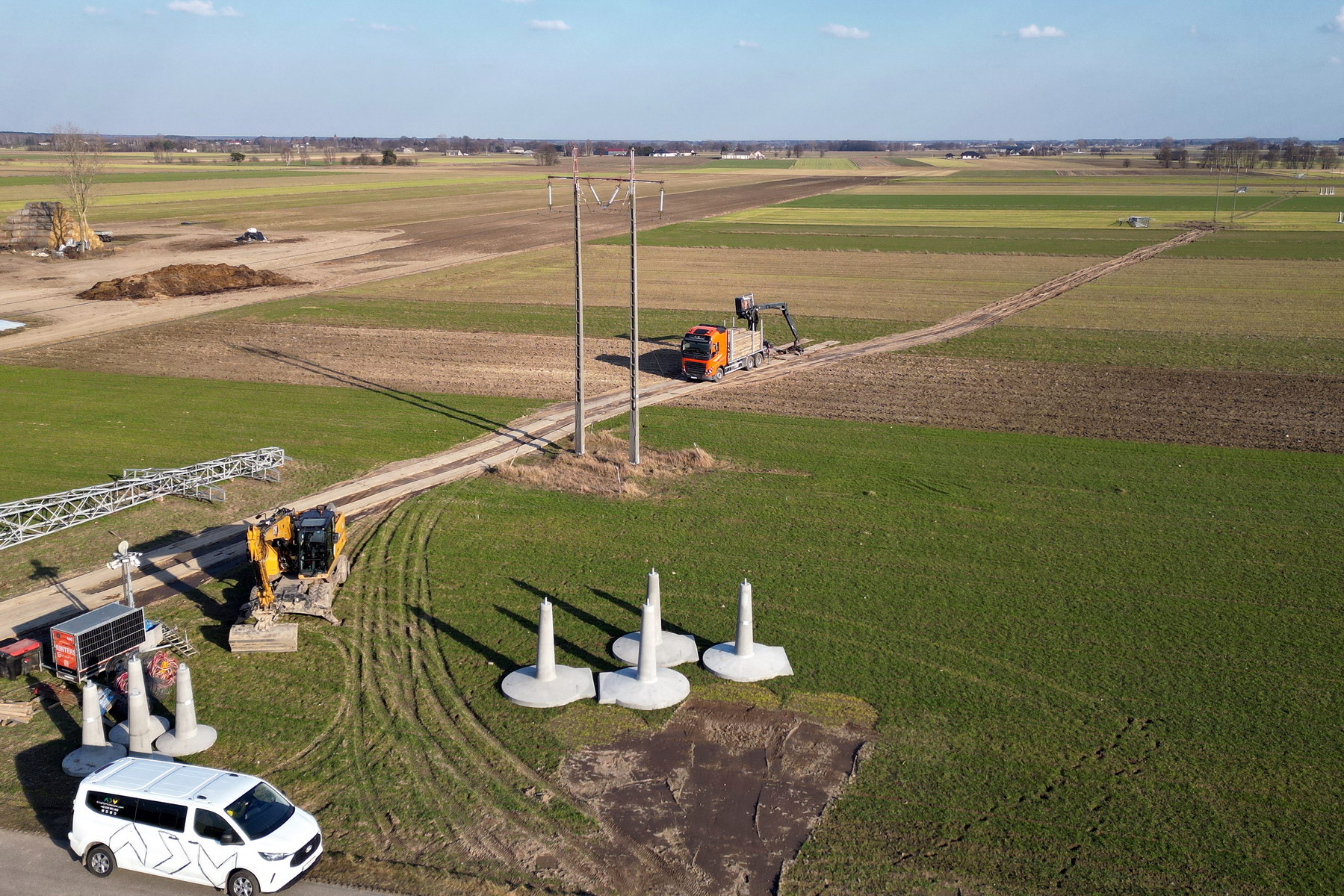
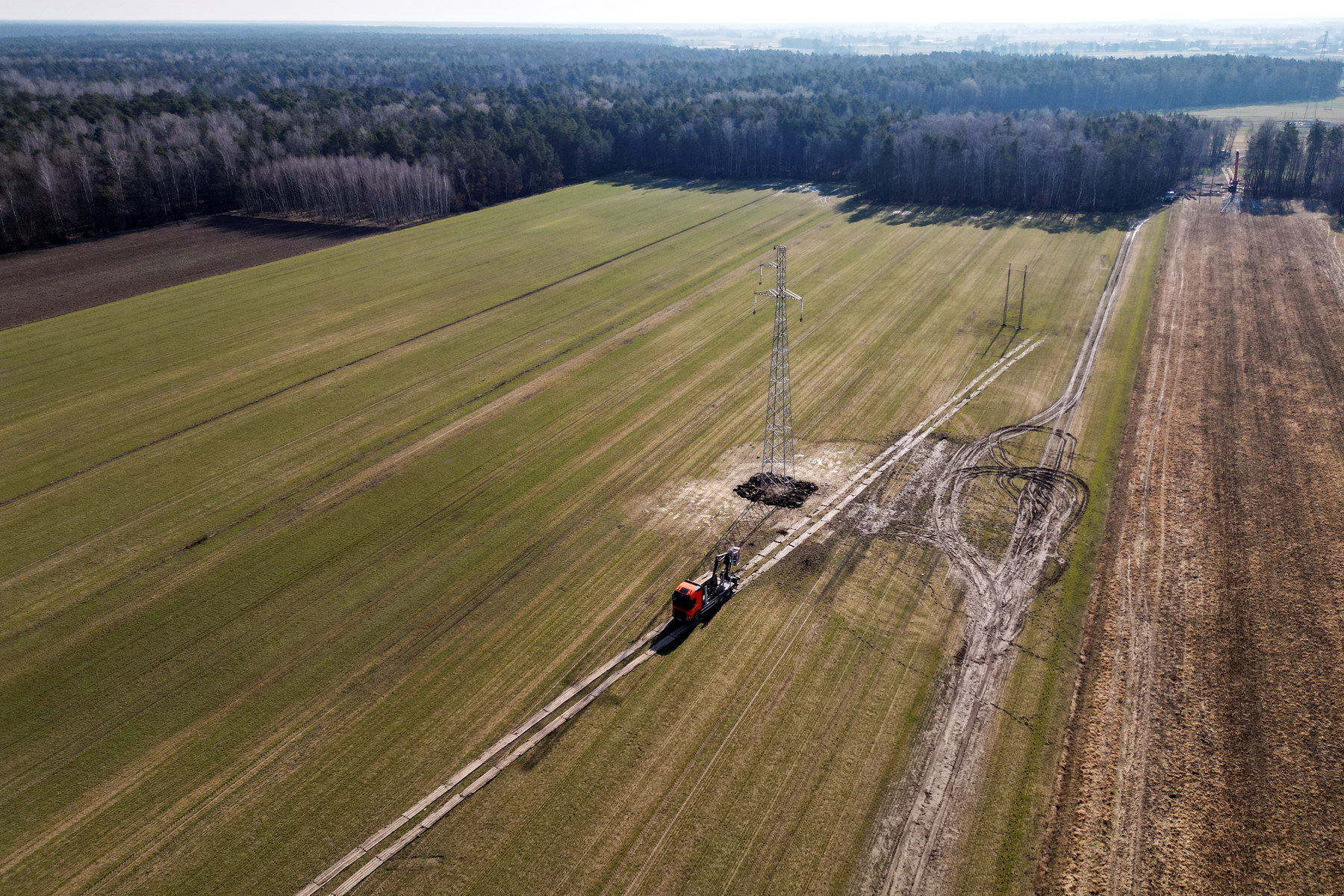
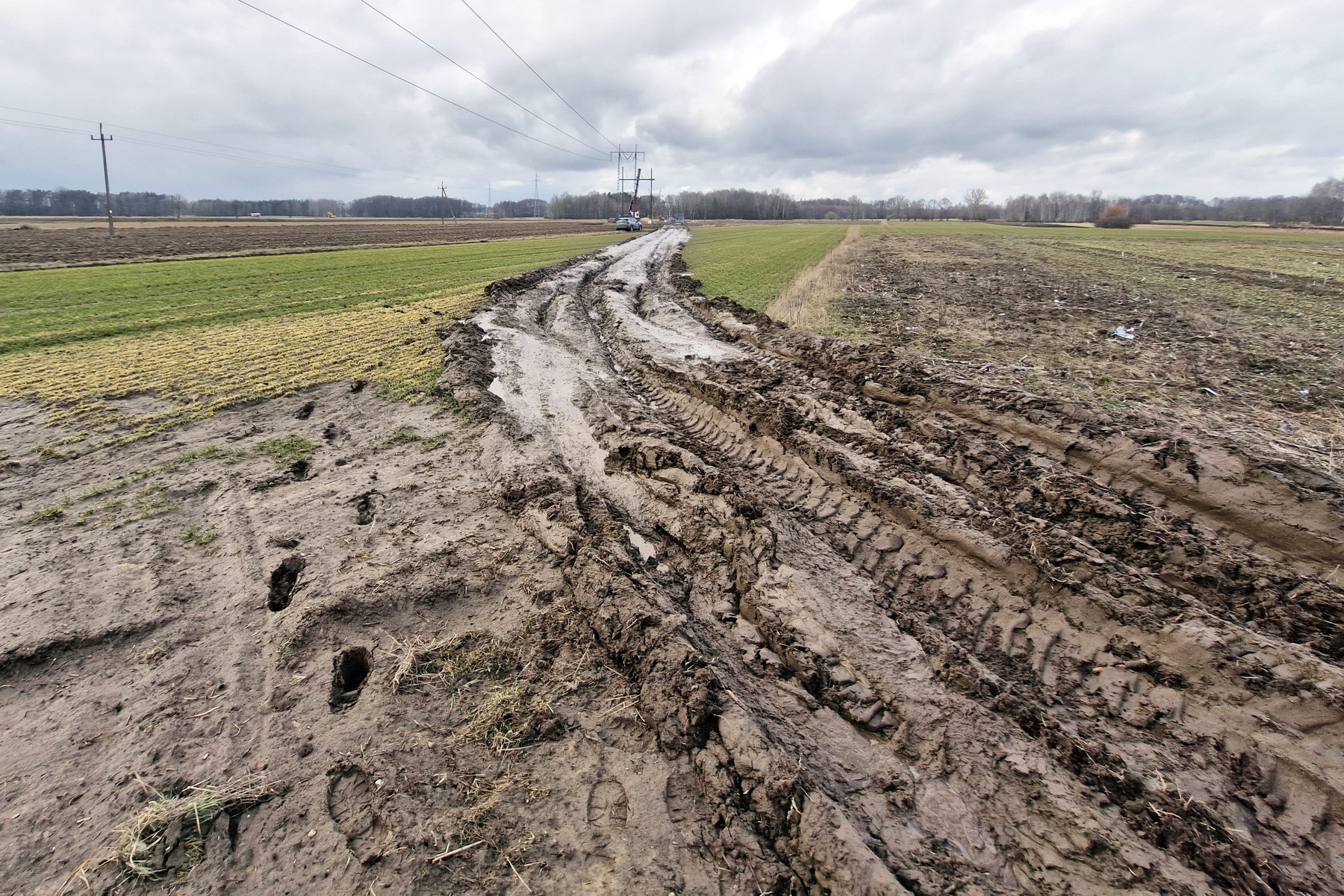
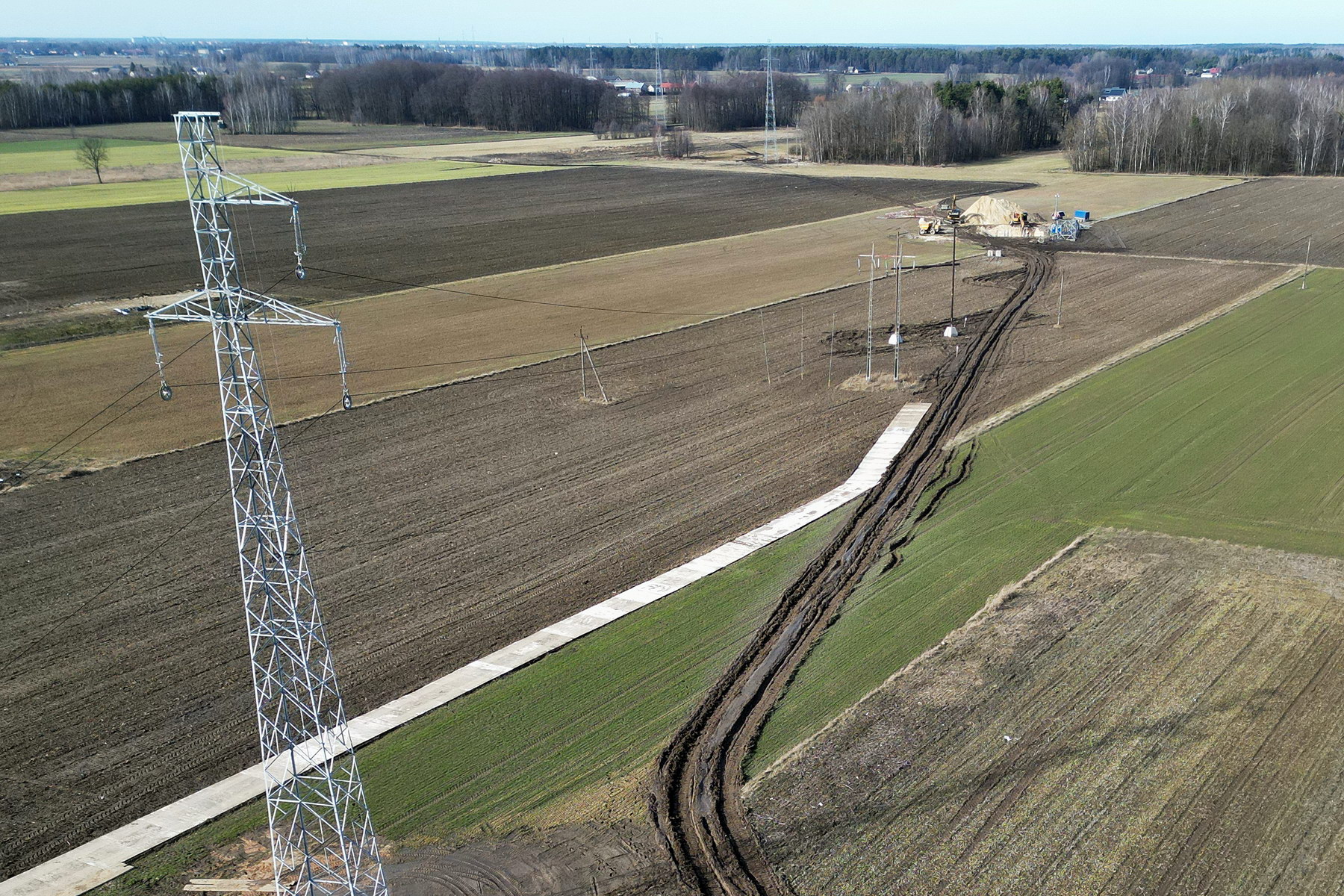
That exact challenge faced the contractors working on a 110 kV line near the town of Rzymy-Rzymki. Difficult terrain and limited access to the pole locations—significantly hindered. Our task was simple: build temporary roads where other solutions fail.
Two types of panels, one goal
For this project, we selected two proven products from our fleet: wooden Metrum panels and aluminum Alu Deck HD.
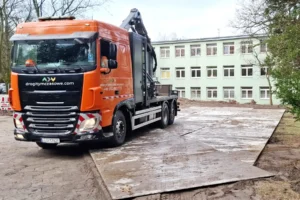
Metrum consists of impregnated timber boards joined with steel rods. They work everywhere where the ground is soft, muddy, or organic—such soil along power-line routes is the norm, not the exception. They transfer dynamic loads of up to 12 t/axle and static loads of up to 30 t/m², and they can be installed both as a full roadway surface and as two separate driving lanes.
Alu Deck HD, on the other hand, are aluminum panels sized 215 × 300 cm with a static load capacity of as much as 200 t/m². They weigh 270 kg, are installed without heavy equipment, and their corrosion resistance ensures they perform flawlessly throughout the whole season—regardless of rainfall or moisture.
Combining both systems in a single project is a deliberate choice: where the terrain was more demanding, Metrum was used; where speed of installation and high point load capacity were the priority—Alu Deck HD.
Why does the power industry require temporary roads?
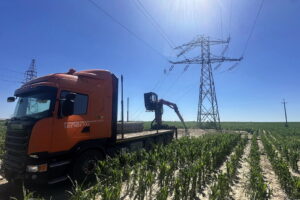
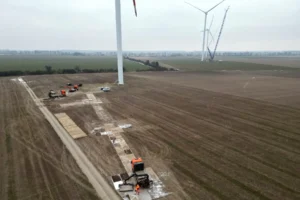
The pole positions for high-voltage (HV) lines are rarely located next to paved roads. Most often they are in agricultural fields, at forest edges, or in wetland areas. The crane that will set the pole weighs several dozen tons. Material trucks must reach each position—sometimes dozens of times. Without proper ground reinforcement, the equipment simply gets stuck—and every hour of downtime translates into real costs for the investor.
Temporary roads for the power industry solve this problem without the need to build permanent infrastructure. After the work is completed, the panels are dismantled and removed—the site returns to its previous condition.
We have experience with lines of every voltage level
400 kV, 220 kV, 110 kV—we have carried out temporary road construction for projects at each of these voltage levels. We know that every investment looks different, and ready-made templates rarely work in practice. That’s why we select solutions for the specific terrain and schedule—not the other way around.
If you’re planning work on a power line and you’re looking for a proven partner to prepare access routes—contact us. We’ll prepare a quote quickly.